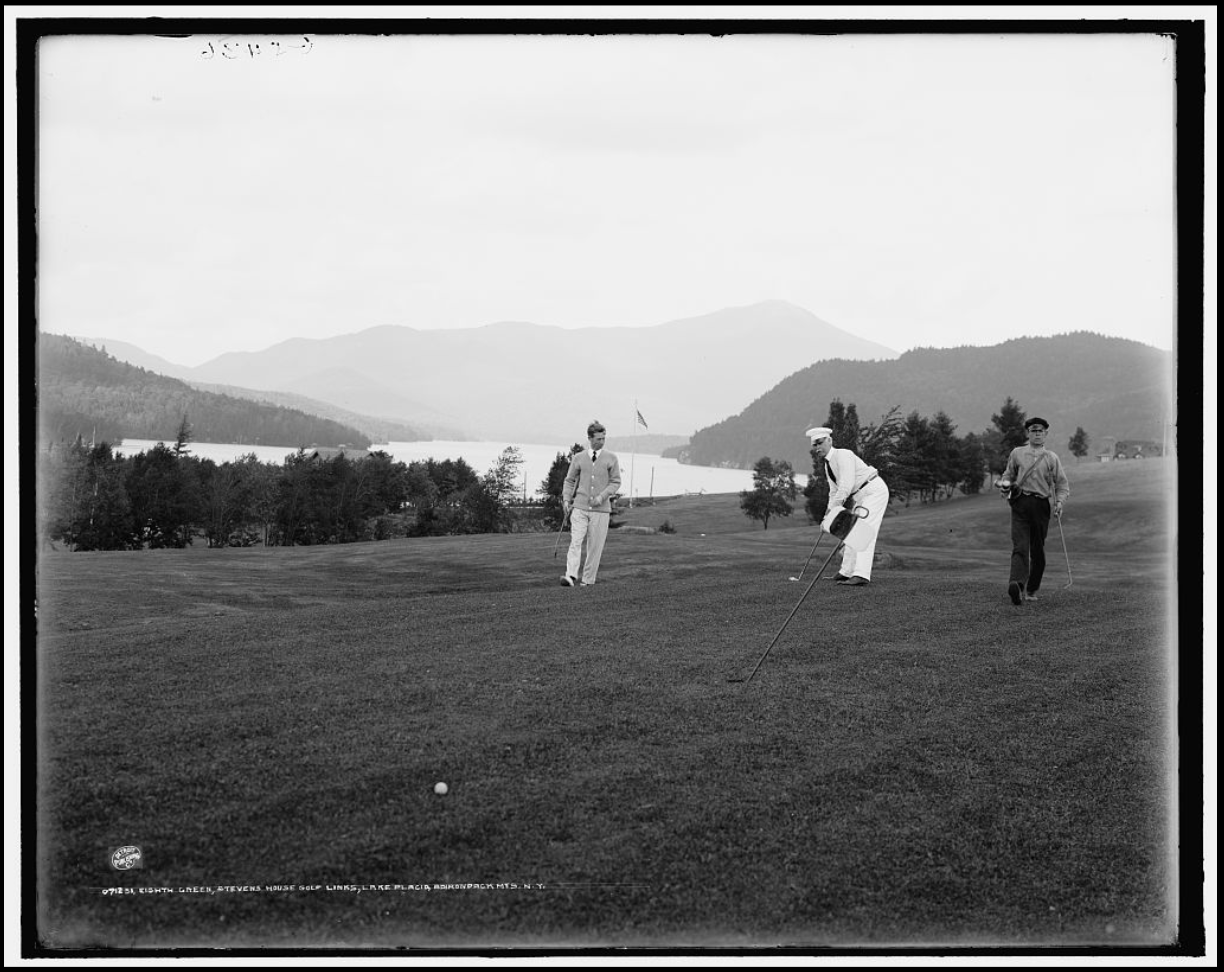
Part 1 of a 3-Part Series on North Country Golf History
I’ll be straight with you. I had no idea how deep the golf history ran up in the North Country until I went looking for it. Once I started digging, I couldn’t stop. What happened in the Adirondacks in the late 1800s isn’t just a footnote in New York golf history; it’s a story of how the game took root in this country. Most of us who grew up around Upstate New York have been driving past history our whole lives without knowing it.
Grab a coffee, or crack a post-round beer, this one’s worth your time.
The Adirondacks Before We Knew Them
To understand how golf ended up in the North Country, you have to picture what this region looked like before the turn of the 20th century.
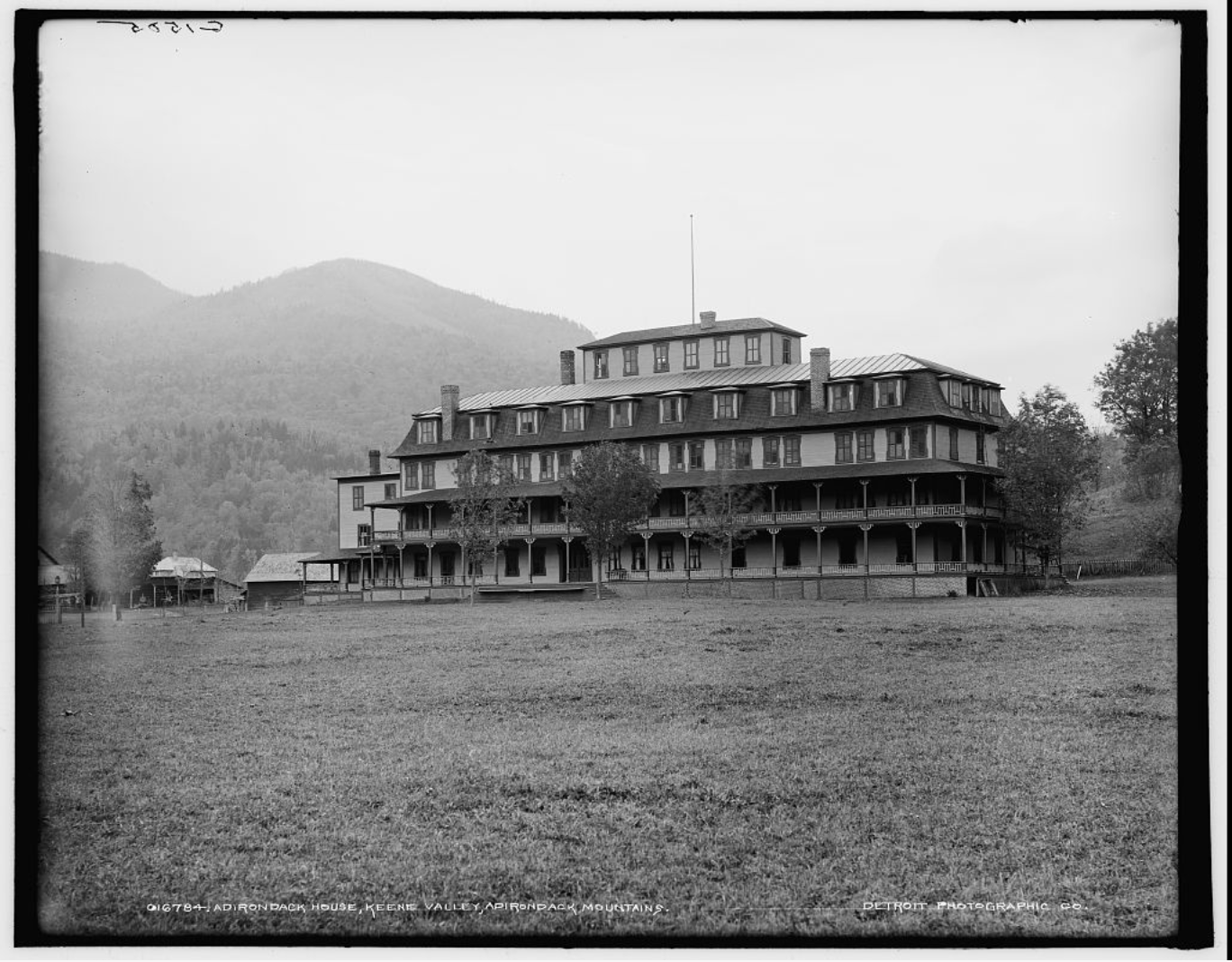
The North Country wasn’t the quiet getaway it can feel like today. Between roughly 1875 and 1910, the Adirondacks were booming. By 1875, there were already 200 hotels and inns spread across the region. The railroad opened the mountains up to travelers from New York City and beyond, and wealthy families came flooding in. Names like Rockefeller and Vanderbilt weren’t just passing through; they were building. Soon, massive private estates went up along the lakeshores. The locals called the estates “Great Camps,” which sounds rustic until you realize some of these places had full household staffs and more square footage than most modern office buildings.
These were not people who sat around. They were competitive, had money to burn, and were always looking for the next thing to be into. Golf, a game that had just crossed over from Europe, fit that criteria perfectly.
Golf Was Barely a Thing in America Yet
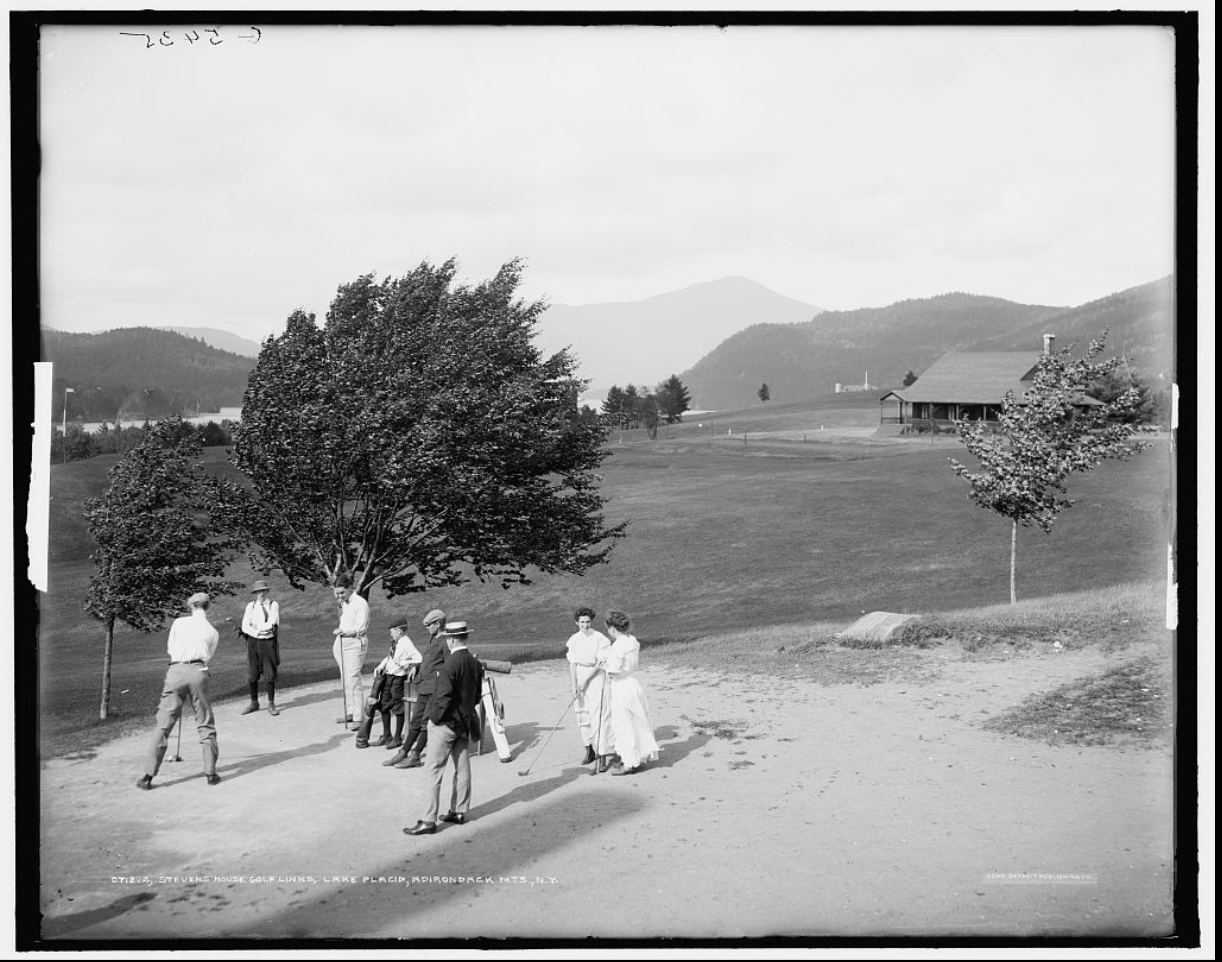
Here’s what makes all of this even more interesting. Golf was a brand new sport in the United States when it started showing up in the Adirondacks in the late 1800s
Saint Andrew’s Golf Club in Yonkers, the oldest continuously operating golf club in the country, was founded in 1888 and started as a three-hole layout in a cow pasture. The USGA wasn’t even formed until December 22, 1894. The sport was barely off the ground nationally when Adirondack courses were already getting built.
The families vacationing up here weren’t late to the game - they were in on it from the beginning. The same crowd building Great Camps on Upper St. Regis Lake was helping drive the earliest growth of golf in America. When you think about it, it makes complete sense that the sport showed up here when it did.
What They Built and Who They Hired
This is the part that gets me every time I think about it.
By the time the Adirondack golf boom had run its course, 59 courses had been built inside the park boundaries, according to a 2008 Wall Street Journal account. At the height of that era, the North Country had one of the highest concentrations of golf courses anywhere in the United States.
And these courses were not rough clearings with a flagstick jammed in the dirt. The people behind the projects hired the best golf architects in the world. Donald Ross. Seymour Dunn. Alexander Findlay. Alister MacKenzie -the same man who later designed Augusta National. These names showed up in the Adirondacks and soon enough left real courses behind.
Someone cared enough about golf, and had enough money, to bring those designers up into the mountains of Upstate New York. That’s something to remember. These historic courses are a piece of American golf history sitting right in our backyard, and most people have no idea.
Why Here, Why Then
It wasn’t an accident. A few things came together at the right moment.
The railroads opened the door. Before train lines pushed into the North Country in the second half of the 1800s, getting to the Adirondacks meant a long journey. Once the trains arrived, wealthy New Yorkers could travel Upstate for a weekend. And wherever the upper echelon crowd went, the amenities followed.
The resort industry drove the competition. Grand hotels didn’t just want a bed and a meal to offer guests. They needed an experience. Golf courses became part of that package fast. If the resort on the next lake had a course and yours didn’t, you were losing business. Courses spread across the region almost like a race.
The timing of golf’s arrival in America sealed the deal. The game landed here in the late 1880s and immediately caught on with the wealthy class. These were the exact same people who had been coming to the Adirondacks for decades already. They didn’t need to be sold on golf. They brought it with them when they came up north.
What Survived
Not all 59 of those courses made it. In fact, most didn’t. The resort industry shrank over time, the Great Camps changed hands, and a lot of the early layouts disappeared asera that built them came to a close.
However, some courses survived andyou can go play golf today on ground that was first laid out in the 1890s,designed by architects whose names belong in any conversation about the history of the game, in a landscape that honestly hasn’t changed all that much since the Gilded Age.
Here’s the best part - you don’t need a membership or a connection to get on most of these courses. They’re public. Greens fees under $100 at a lot of them. Tee times open to anyone.
The history is still out there. You just have to go play it.
In Part 2, we’re getting into the specific courses that carried all of this forward. Cobble Hill, Whiteface, Thendara, Craig Wood. Each one has its own story and each one is worth the drive.
Part 3 is the one I’ve been most excited to write. A kid who grew up in Lake Placid, became one of the best golfers in the world, won two majors in a single year, and had the most famous shot in Masters history hit against him. That story gets its own post.
Stay tuned.
Sources
• Adirondack Hub, “A Hub for History” — adirondackhub.com • Adirondack Explorer, “Golf Has a Rich History in the Adirondacks” (April 2025) — adirondackexplorer.org • Regional Office of Sustainable Tourism (ROOST), “Play Through the Adirondack Region” (April 2024) — roostadk.com • Adirondack Golf Trail — adirondackgolftrail.com • Saint Andrew’s Golf Club, club history — saintandrewsproshop.com • United States Golf Association, “Celebrating 120 Years of the USGA” — usga.org • CNN Travel, “Rough it Like a Gilded Age Millionaire in the Adirondacks” — cnn.com